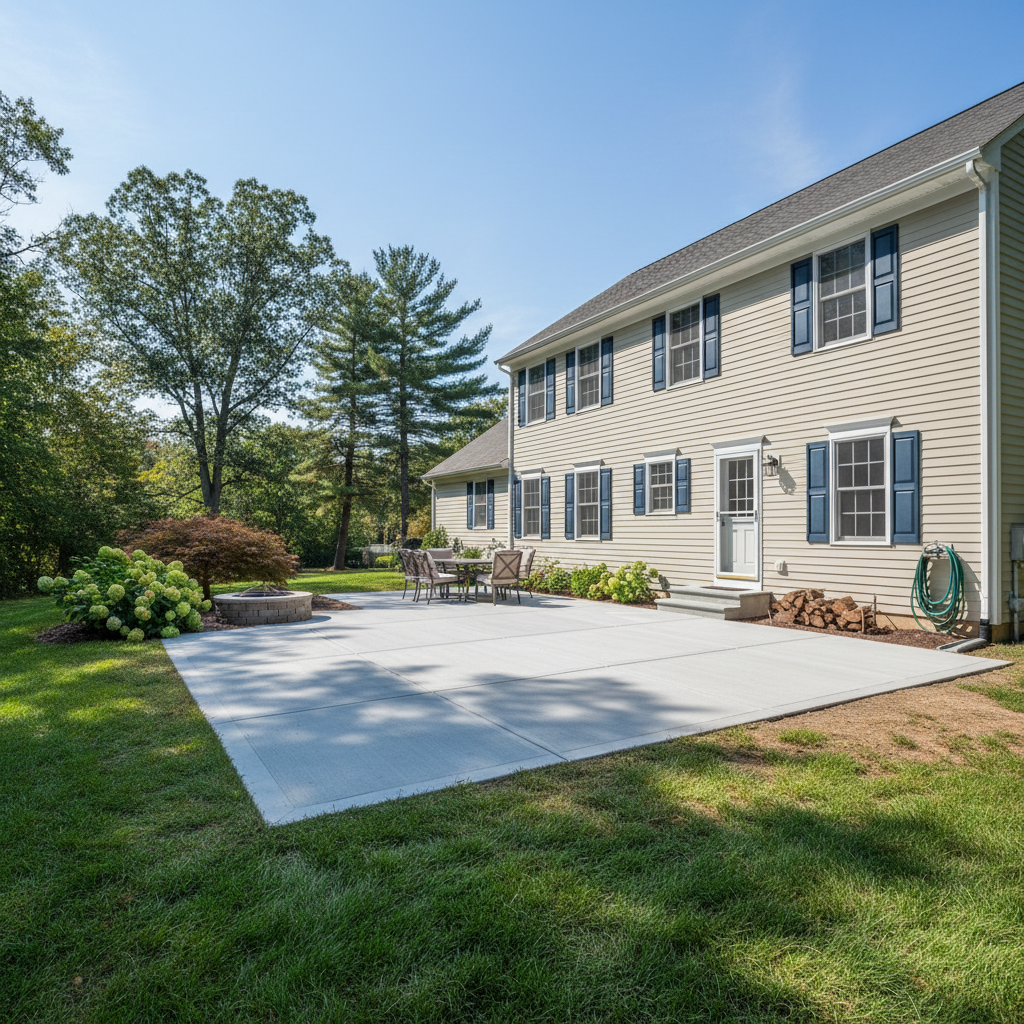
Pouring a concrete driveway only to watch it crack because you did not account for a sudden drop in temperature is a frustrating experience. Down here in Toms River, our weather keeps us on our toes. Between the humid summers near the Barnegat Bay and those freezing coastal winds blowing off the Atlantic in January, concrete flatwork takes a real beating if it is not timed right.
Why the Local Climate Dictates Your Schedule
Concrete does not dry—it cures through a chemical reaction that needs stable moisture and temperature. If you try pouring a patio during a scorching July afternoon in Silver Bay, the water evaporates too fast. You will end up with a weak surface prone to dusting and cracking. On the flip side, pour when a November freeze is creeping in, and the water inside the mix expands before the slab gains its strength. That is a quick ticket to spalling.
Spring and fall are usually your best bets around Ocean County. The temperatures are mild, and the concrete cures at an even pace. Late September and October give us gorgeous working days with cool nights that help the slab reach maximum strength without baking in the sun.
Fighting the Elements Year-Round
Once your new driveway or walkway is in, you are not off the hook. Here is what you need to keep in mind:
- Salt is brutal. If you live close to the water or deal with heavy road salt on Route 37, seal your concrete every couple of years.
- Drainage matters. Our sandy pine barrens soil drains well in some spots, but heavy clay pockets hold water that freezes and heaves slabs.
- De-icers with ammonium nitrate will chew right through a fresh surface. Stick to plain sand or calcium chloride when winter gets nasty.
Ocean Concrete Construction sees plenty of DIY jobs gone wrong simply because the weather turned halfway through a pour. Getting the mix right for our local Toms River conditions makes all the difference between a driveway that lasts thirty years and one that fails in three. Plan your timing, watch the radar, and do not rush the cure.