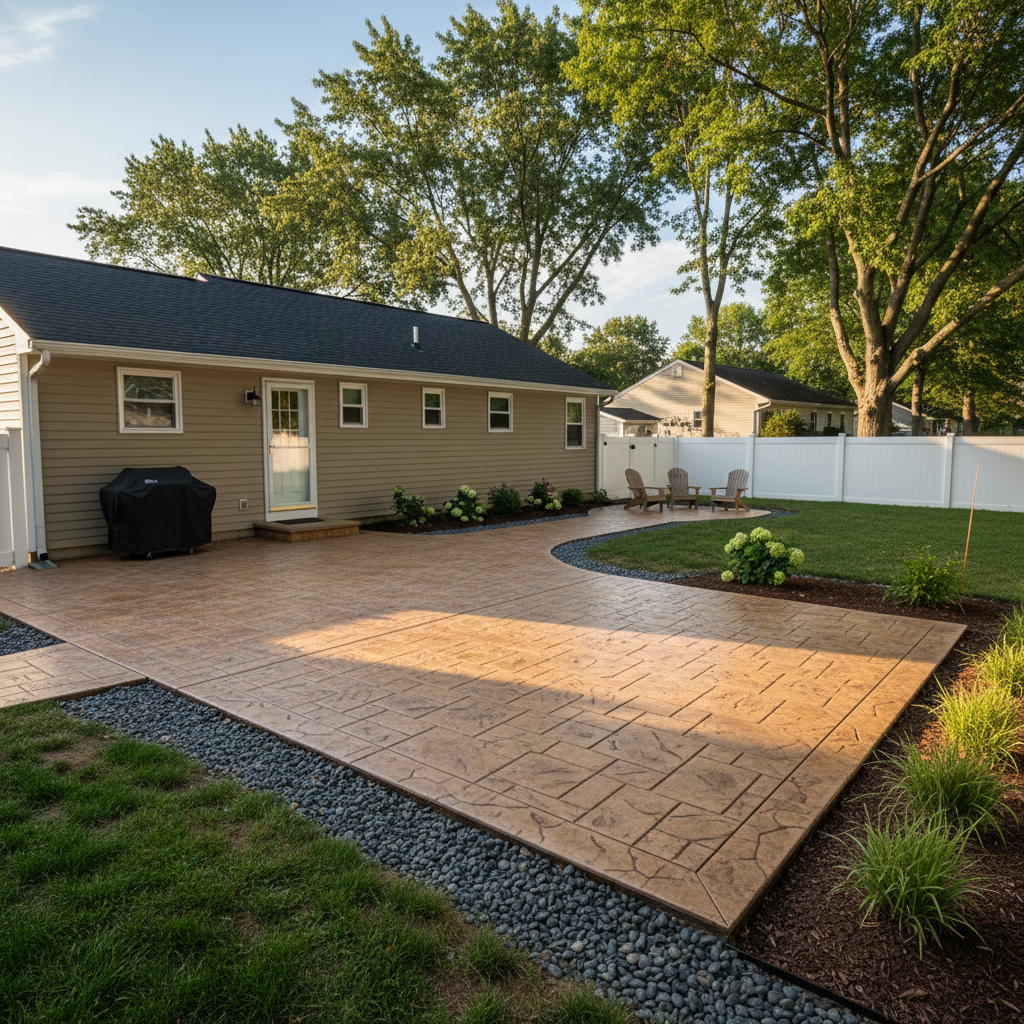
Alright, let's talk numbers. You're looking at decorative concrete for your home or business here in Toms River, maybe a cool stamped patio, a fancy driveway, or some exposed aggregate around the pool. It's a great choice, looks fantastic, and lasts forever if it's done right. But everyone always asks, "What's it gonna cost me?"
You'll hear a lot of contractors give you the old "it depends" line, and yeah, it does depend on a few things. But I'm not going to leave you hanging. I'm going to give you some real figures based on what I've seen and what we charge at Ocean Concrete Construction, so you can get a solid idea.
What Affects the Price Tag?
There are a bunch of moving parts here, and they all add up. Knowing these will help you understand why one quote might be higher than another.
- Type of Decorative Finish: This is probably the biggest one. Plain broom-finished concrete is your cheapest option, hands down. Stamped concrete, especially with multiple colors and intricate patterns, is more expensive because it's more labor-intensive and requires specialized materials and tools. Exposed aggregate falls somewhere in the middle, often a bit more than plain but less than complex stamping.
- Size and Accessibility: Bigger jobs mean more concrete, more labor, and more time. That's obvious. But accessibility is huge. If we're hauling concrete through a tight backyard gate or around a bunch of bushes, it takes longer and costs more than pouring a wide-open driveway.
- Site Preparation: This is where a lot of hidden costs can pop up. Do we need to demo old concrete? Is the ground level, or do we need to bring in a lot of fill dirt? Here in Toms River, especially in some of the older neighborhoods closer to the bay, you might have sandy soil that needs extra compaction or even a thicker base layer to ensure long-term stability. Poor prep means a bad job, and we don't do bad jobs.
- Complexity of Design: Simple patterns are easier and quicker. If you want custom borders, multiple colors, intricate designs, or tricky curves, that adds to the labor and material cost. Every cut, every color application, every detail takes time and skill.
- Color and Sealer: Basic gray concrete is, well, basic. Adding integral color (mixed into the concrete itself) or topical color (applied after) increases material costs. High-quality sealers, especially those with UV protection or enhanced durability, also add to the final price, but they're crucial for protecting your investment.
Typical Price Ranges (Per Square Foot)
Okay, let's get down to some actual numbers. Keep in mind these are general ranges for our area, and they can fluctuate with material costs and demand.
- Plain Concrete (Broom Finish): You're usually looking at around $8 to $12 per square foot. This is your baseline.
- Exposed Aggregate: This typically runs from $12 to $18 per square foot. It's a great look, very natural, and less slippery than some stamped options.
- Basic Stamped Concrete (1 color, simple pattern): Expect to pay $15 to $25 per square foot. Think a simple brick or slate pattern with one primary color.
- Premium Stamped Concrete (Multiple colors, intricate patterns, custom work): This is where it can really jump, from $25 to $40+ per square foot. If you want something truly unique, with hand-coloring, detailed borders, or complex textures, this is your range.
So, for a 500 sq ft patio, you could be looking at anywhere from $4,000 for a plain finish to $20,000 or more for a high-end stamped job. Big difference, right?
What Should a Quote Include?
When you get a quote from Ocean Concrete Construction, or any reputable contractor, it should be clear and detailed. Don't just accept a single number.
- Site Preparation: This should spell out excavation, grading, base material (like gravel), and compaction.
- Concrete Materials: Specify the PSI (strength) of the concrete, any integral colors, and fiber mesh if it's being used.
- Decorative Finish Details: Clearly state the type of finish (stamped, exposed, etc.), patterns, and color applications.
- Reinforcement: Rebar or wire mesh should be included for strength.
- Control Joints: Essential for preventing random cracking. They should be saw-cut or hand-tooled at appropriate intervals.
- Sealing: The type of sealer and how many coats will be applied.
- Cleanup and Disposal: Make sure they're not leaving you with a mess.
- Warranty: A good contractor will stand behind their work.
How to Avoid Overpaying
Nobody wants to get ripped off. Here's my advice:
- Get Multiple Quotes: Don't just go with the first guy. Get at least three detailed bids. This helps you compare apples to apples.
- Check References and Portfolios: Look at their past work. Ask for client references. A good contractor will be proud to show off their jobs.
- Understand the Details: If a quote is significantly lower, ask why. They might be cutting corners on prep work, using lower quality materials, or skipping important steps like proper sealing.
- Don't Be Afraid to Ask Questions: If you don't understand something in the quote, ask. It's your money, and you deserve to know exactly what you're paying for.
- Beware of Cash-Only Deals: This is a red flag. Reputable businesses operate above board.
Decorative concrete is an investment that adds real value and curb appeal to your property. Done right, it'll look fantastic for decades. Just make sure you're working with someone who knows what they're doing and gives you a fair, transparent price.