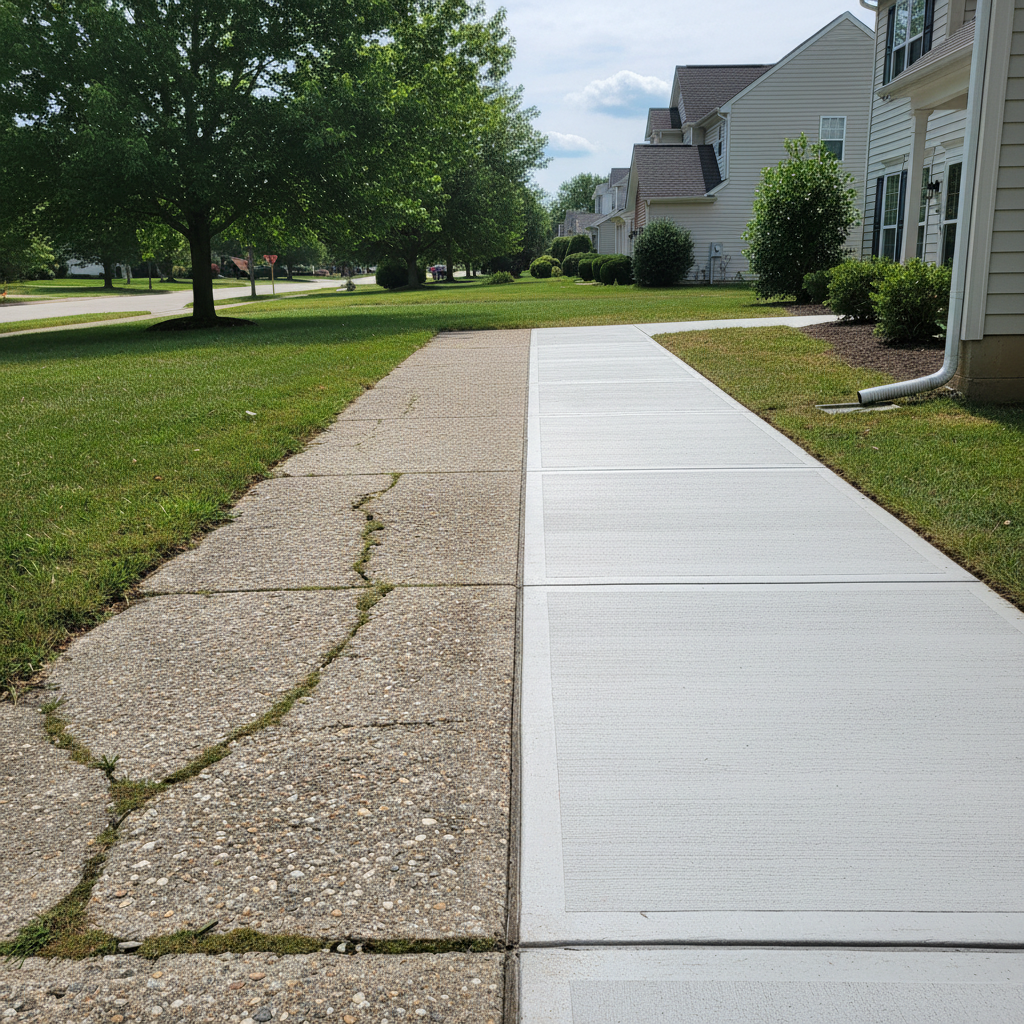
So, you're looking at putting in a new sidewalk or fixing up an old one around your place in Toms River. Good for you. It's not just about getting from point A to point B; a good sidewalk really adds to your home's curb appeal and safety. When folks call me up, one of the first questions they often have is whether to go with poured concrete or concrete pavers. Both are solid choices, but they've got their own pros and cons, especially with our Jersey weather. Let's dig into it.
Poured Concrete: The Classic Choice
Poured concrete is what most people picture when you say 'sidewalk.' It's a classic for a reason. We mix it up, pour it, and finish it right there on site. It's pretty straightforward, and when it's done right, it's incredibly durable.
Cost
Generally speaking, poured concrete is often the more budget-friendly option upfront. You're paying for the material and the labor to pour and finish it. There's less individual handling of units, which keeps labor costs down compared to pavers.
Durability & Maintenance
A well-installed poured concrete sidewalk can last for decades. I'm talking 30-40 years, easy, if it's got a good base and proper control joints. The biggest maintenance concern is cracking. We get some serious freeze-thaw cycles here in Toms River, and that movement in the ground can put stress on concrete. If a crack does happen, repairing it can be tricky to make it look seamless. You might end up with a patch that stands out. You'll also want to seal it every few years to protect it from moisture and stains, especially if you're dealing with a lot of salt in the winter.
Appearance
For appearance, poured concrete typically gives you a clean, uniform look. You can get it broom-finished for a little texture or even stamped to mimic other materials like stone or brick. It's a solid, consistent surface.
Concrete Pavers: Versatility and Style
Concrete pavers are individual units, like bricks, that are laid over a prepared base. They come in all sorts of shapes, sizes, and colors, which gives you a lot of design flexibility.
Cost
Pavers usually cost more than poured concrete upfront. The material itself can be more expensive per square foot, and the labor involved in laying each paver individually adds up. It's a more intricate installation process.
Durability & Maintenance
This is where pavers really shine, especially in our climate. If a paver cracks, or if you get some uneven settling, you can simply lift out the damaged paver and replace it with a new one. No ugly patches. The joints between pavers allow for a little movement, which helps them handle our freeze-thaw cycles better than a solid slab. You'll still want to seal them to protect the color and prevent weeds from growing in the joints, but overall, they're very forgiving when it comes to repairs.
One thing to watch out for is settling. If the base isn't prepared perfectly, or if you have a lot of heavy foot traffic, you might see some pavers sink a bit over time. But again, these are usually easy fixes.
Appearance
Pavers offer a huge range of aesthetic options. You can create intricate patterns, mix colors, and choose textures that really complement your home. From a modern, sleek look to something more rustic, pavers give you a lot of design freedom that poured concrete just can't match.
My Recommendation for Toms River Homeowners
Alright, so what's the bottom line for folks living around here, maybe in a place like Silverton or Holiday City? Both are good, but I lean towards concrete pavers for sidewalks, especially if your budget allows for it.
Here's why: Our ground here in Toms River can be a bit sandy in spots, and we get those harsh winters with freezing and thawing. Poured concrete, even with proper control joints, is more susceptible to cracking under those conditions. When it cracks, it's a headache to fix without it looking obvious. Pavers, with their individual units and flexible joints, handle that ground movement and temperature changes much better. If one does crack, or if you need to access something underneath, it's a simple swap.
Yes, the upfront cost is usually higher, but the long-term durability and ease of repair often make pavers a smarter investment. You get a beautiful, customizable look, and you won't be staring at an unsightly crack down the middle of your sidewalk in a few years. For a main walkway, that peace of mind is worth it.
Now, if you're on a tighter budget and still want a solid, reliable surface, poured concrete is absolutely still a viable option. Just make sure whoever you hire, like us at Ocean Concrete Construction, knows how to properly prepare the base and install those control joints to give it the best chance against our local conditions.
Ultimately, it comes down to what you value most: initial cost savings or long-term flexibility and aesthetic variety. If you're still on the fence, give us a call. We can walk your property, talk through your specific needs, and help you figure out the best path forward.