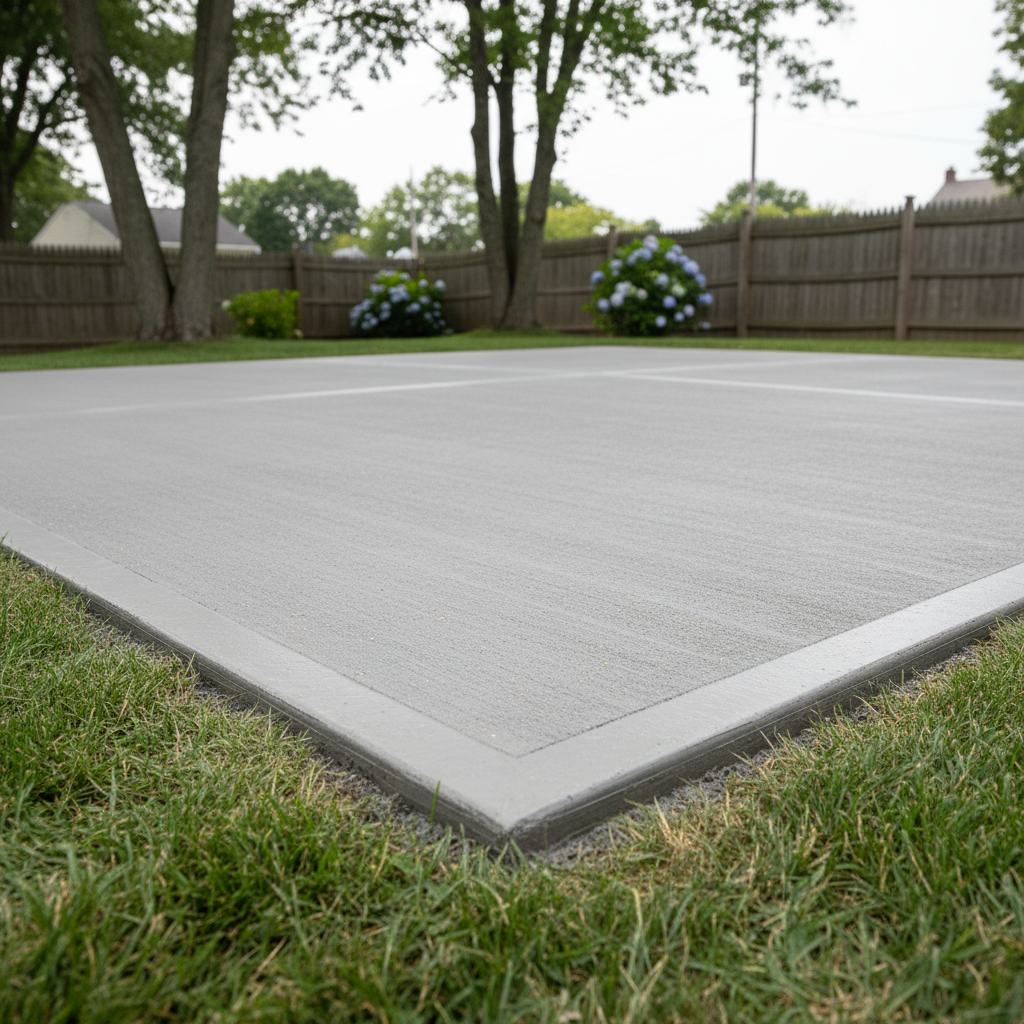
Alright, let's talk concrete flatwork. You’re probably thinking about a new patio, a wider driveway, or maybe a nice clean walkway around the side of your house. It looks simple enough, right? Just pour some mud, smooth it out, and you’re done. Well, not exactly. There's a lot more to it than that, and knowing what you're getting into can save you a ton of headaches and money.
Before You Even Mix a Bag
First things first, what are you trying to build? A small, simple stepping stone path? Maybe you can tackle that yourself. A 20x20 patio or a whole new driveway? That’s a different beast entirely. You need to think about drainage, especially here in Toms River where we get our fair share of rain and that sandy soil can be tricky. You don't want water pooling up against your foundation or creating a swamp in your yard.
You'll need to figure out your subgrade. That's the ground underneath your concrete. It needs to be properly compacted and graded. If it's not, your concrete will crack, sink, or heave. I've seen plenty of DIY jobs where folks skipped this step, and a year later, their new patio looks like a jigsaw puzzle. For anything bigger than a small pad, you're looking at needing a tamper, maybe even a plate compactor. Do you have access to that equipment? Do you know how to use it right?
Also, don't forget about permits. Depending on the size and location of your project, the Township of Toms River might require one. It’s always best to check with the building department before you start digging.
During the Pour: It's a Race Against Time
This is where things get real, real fast. Concrete doesn't wait around for you. Once that truck shows up, you've got a limited window to get it placed, screeded, floated, and finished. If you're doing a small patch with bags of mix, you're still mixing, wheelbarrowing, and spreading, all while it's setting up.
For anything substantial, you'll need a crew. Not just one buddy, but a few people who know what they’re doing. Screeding, which is leveling the concrete, takes coordination. Floating, which brings the cream to the surface, needs a good touch. And then there's finishing – brooming for grip, or troweling for a smooth surface. Each step is critical, and if you miss your window, you're stuck with a rough, uneven, or weak slab.
Here’s a quick rundown of what you can probably do yourself versus when to call someone like us at Ocean Concrete Construction:
- DIY Friendly: Small, non-structural pads (like for a trash can), stepping stones, maybe a very small walkway that's not critical for drainage. You're talking a few bags of mix, a shovel, a trowel, and a level.
- Call a Pro: Driveways, patios, large walkways, foundations, retaining walls, anything that needs to be perfectly level, drain correctly, or support significant weight. If you're thinking about renting a concrete mixer or having a truck deliver, you're probably in 'call a pro' territory. The cost of renting equipment, buying materials, and then potentially messing it up usually outweighs the cost of hiring experienced concrete contractors.
After the Pour: Curing is Key
So, you got the concrete down. Great! Now, don't just walk away. Curing is just as important as the pour itself. Concrete doesn't dry; it cures, which is a chemical reaction. It needs moisture to gain strength. If it dries out too fast, it'll be weak and crack. You'll need to keep it wet for at least 3-7 days, sometimes longer depending on the mix and the weather. That means misting it, covering it with plastic, or using a curing compound.
Don't drive on your new driveway or put heavy furniture on your patio too soon. Give it time. Most concrete reaches about 70% of its strength in 7 days, but it keeps getting stronger for weeks. We usually recommend at least a week for foot traffic and 28 days for vehicle traffic.
Look, I get it. Everyone wants to save a buck. And for some projects, DIY makes sense. But with concrete flatwork, the margin for error is pretty small, and the consequences of getting it wrong are expensive and permanent. If you're unsure, or if your project is anything bigger than a dog house pad, give us a call. We're happy to talk through your project and give you an honest assessment of what it'll take.