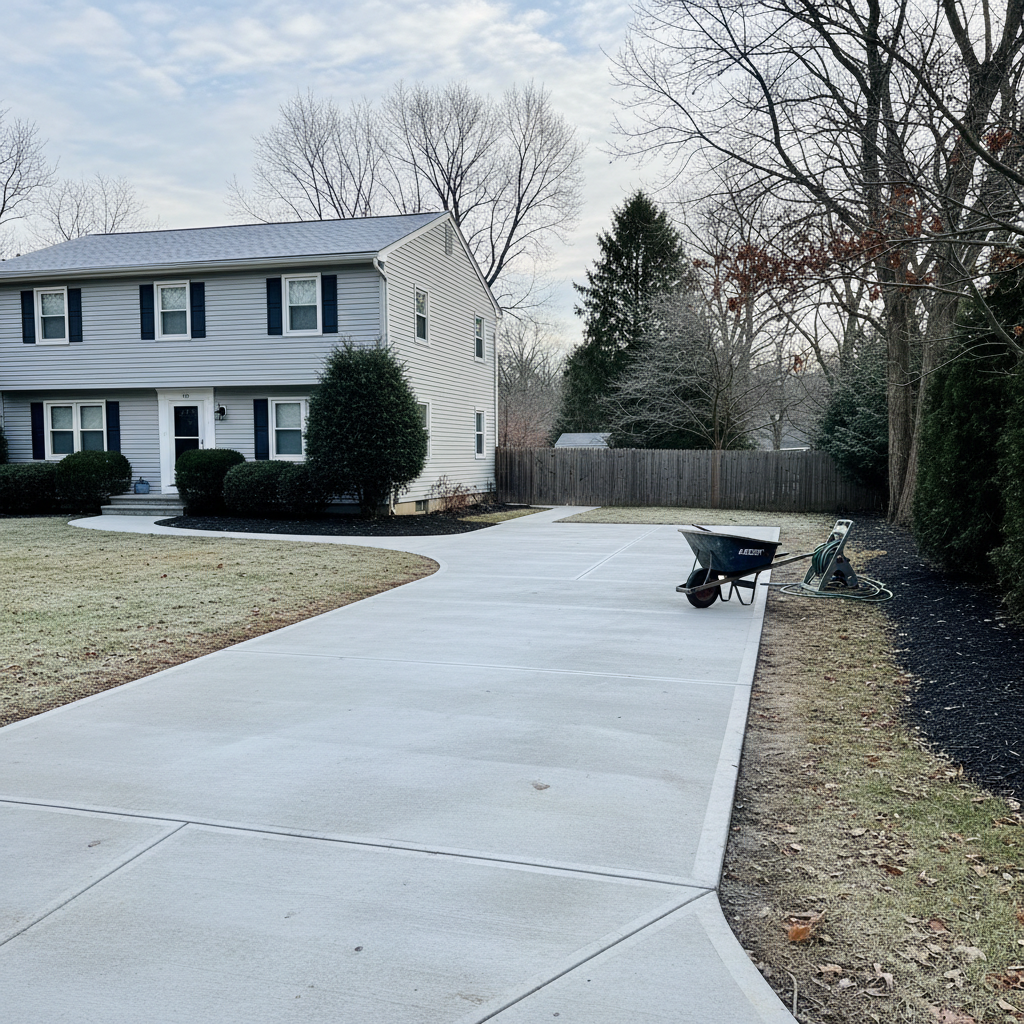
Got a crack in your driveway? Or maybe your patio's just seen better days? You're probably wondering when it's best to get that concrete fixed. It's not just about when you have time, you know. Here in Toms River, our local weather really dictates when concrete work can happen, and more importantly, when it'll actually *last*.
When to Schedule Your Concrete Repair in Toms River
Look, I've been pouring and fixing concrete around here for years, and I can tell you, timing is everything. You can't just slap down concrete in any old weather and expect it to hold up. The sweet spot for most concrete repair jobs, especially anything involving new pours or bigger patches, is usually spring and fall.
Why those seasons? It's all about temperature, plain and simple. Concrete needs a specific temperature range to cure right. We're generally talking somewhere between 50°F and 80°F. If it's too cold, the water in the mix can freeze, expand, and damage the concrete before it even gets a chance to gain strength. Too hot, and the water evaporates way too fast, which leads to quick drying, shrinkage, and yep, more cracks down the road. We see this a lot in the summer months when people try to rush things.
- Spring (April to early June): This is prime time, no doubt about it. The ground has thawed, temperatures are pretty consistently mild, and we usually get enough rain to keep things from drying out too fast. But not so much rain that it washes out new work. It's truly a sweet spot for concrete to cure slowly and strongly.
- Fall (September to late October): Another excellent window. The intense summer heat has finally backed off, and we're usually still clear of hard freezes. The ground temperature is stable, which is fantastic for curing. Just keep an eye on those overnight lows as we get closer to winter, that's all.
Summer can be a bit tricky. If you absolutely need work done in July or August, we can certainly do it, but it means taking extra precautions. We'll often have to pour early in the morning, use special admixtures to slow down the set, and keep the concrete constantly wet for proper curing. It's definitely more labor-intensive and has a higher risk of issues if it's not managed perfectly. Winter? Forget about it for most exterior repairs. Freezing temperatures are the absolute enemy of fresh concrete.
Weather Conditions That Affect the Work
Beyond just temperature, other weather factors play a huge role. You might think, 'It's just concrete, what's the big deal?' But trust me, it's a science.
Rain: A light drizzle isn't usually a problem once the concrete has set a bit, but heavy rain on fresh concrete? That's a disaster. It can wash away the cement paste, weaken the surface, and ruin the finish. That's why we're constantly checking the forecast. If there's a good chance of heavy rain, we'll reschedule. It's always better to wait a few days than to do a job that won't last.
Humidity: High humidity can slow down the drying process, which can actually be a good thing because it allows for a longer, stronger cure. Low humidity, especially when it's combined with high temperatures and wind, can cause the concrete to dry too fast, leading to surface cracking. We often use curing compounds or keep the surface wet to combat this.
Wind: Believe it or not, wind can be a major factor. Strong winds can speed up surface drying, similar to low humidity. This can lead to what we call 'plastic shrinkage cracks' on the surface before the concrete has even had a chance to gain strength. We sometimes use windbreaks if it's really blustery out.
Protecting Your Concrete Investment Year-Round
Once your concrete repair is done, you're not totally off the hook. Especially here in Toms River, with our coastal weather and the freeze-thaw cycles we get, a little maintenance goes a long way to making your concrete last.
- Sealing is Key: This is probably the most important thing you can do, honestly. A good quality penetrating sealer applied every few years (depending on the product and how much traffic it sees) will protect your concrete from moisture, de-icing salts, oil stains, and UV damage. Think of it like sunscreen and a raincoat for your driveway.
- Watch the De-Icers: Be super careful with de-icing salts in winter. Products containing ammonium nitrates or ammonium sulfates are particularly harsh and can cause significant damage to concrete, even sealed concrete. Stick to sand for traction or use calcium chloride-based de-icers sparingly. Better yet, shovel early and often!
- Clean Regularly: Don't let leaves, dirt, and debris sit on your concrete for extended periods. They can trap moisture and promote staining or even growth of moss and algae, which can be slippery and degrade the surface over time. A simple sweep or power wash (on a low setting, from a distance) once in a while is all it takes.
- Mind the Drainage: Make sure water drains away from your concrete slabs, not towards them or underneath them. Poor drainage can lead to erosion under the slab, causing settling and cracking. This is especially true in areas like the East Dover section, where the soil can be a bit sandy and prone to shifting.
- Address Small Issues Fast: See a small crack or a spalling area? Don't ignore it. Small problems can turn into big, expensive ones quickly. Water gets in, freezes, expands, and then you've got a much larger repair on your hands.
We've seen it all at Ocean Concrete Construction. Taking these steps and understanding how our local climate affects concrete will help you get the most life out of your driveways, patios, and walkways. It's about being smart and proactive, not waiting until you need a whole new slab, right?