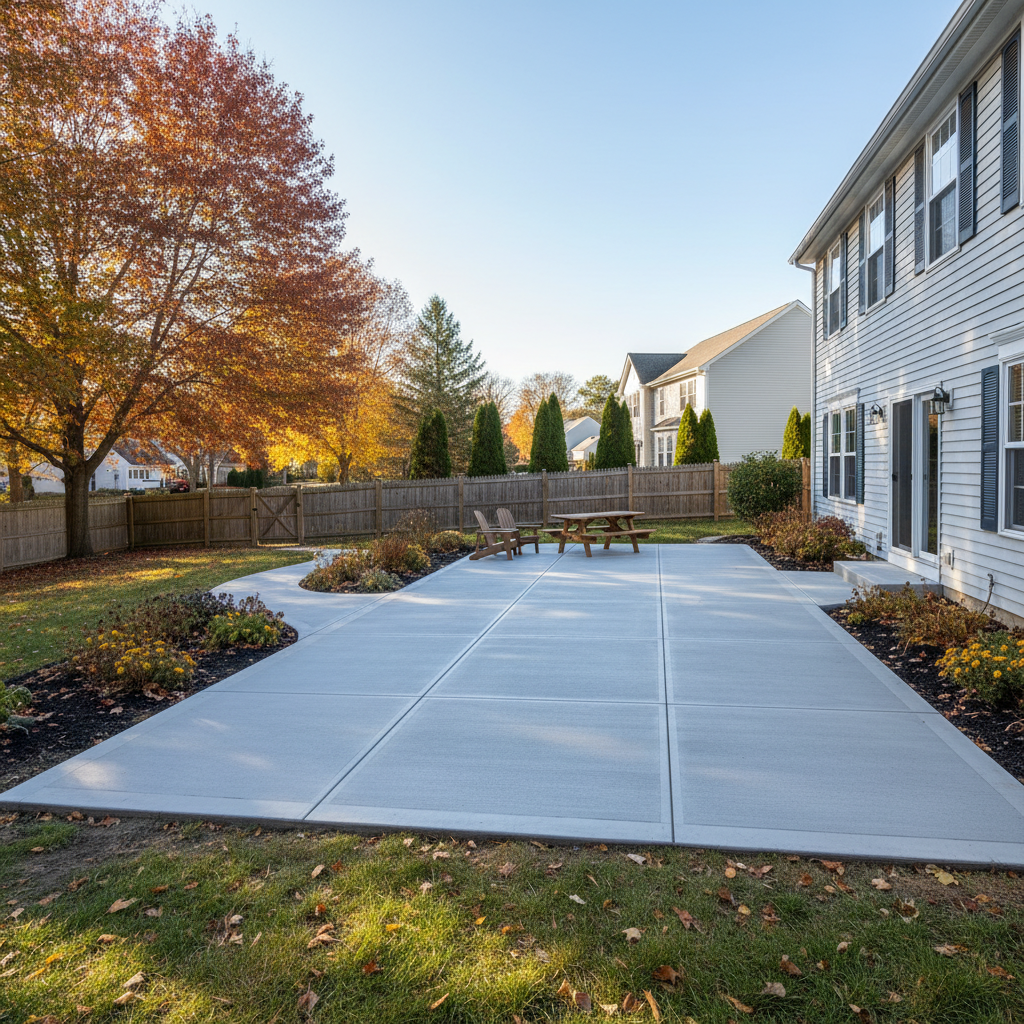
You're thinking about a new patio, driveway, or maybe some fresh walkways around your Toms River home. Great. But before you jump in, let's talk about something critical that often gets overlooked: the weather. Down here on the Jersey Shore, our climate isn't just about beach days; it seriously impacts concrete work, from when it's poured to how long it lasts.
When's the Best Time for New Concrete?
Honestly, spring and fall are your best bets. The ideal temperature range for pouring and curing concrete is usually between 50 and 70 degrees Fahrenheit. Why? Because concrete needs time to cure properly, and extreme temperatures mess with that process.
Spring (Late April to Early June): This is prime time. The ground has thawed, temperatures are consistently mild, and you usually get a good mix of sun and moderate humidity. It allows the concrete to cure slowly and develop maximum strength without drying out too fast or freezing.
Fall (September to Late October): Another excellent window. The summer heat has broken, and we're not yet into the deep freezes. Again, consistent, moderate temps are key. You want to make sure the concrete has fully cured before the first hard frost hits, which can be a real problem for new pours.
Summer can work, but it's trickier. Those hot, humid July and August days mean concrete can dry too fast, leading to cracking or a weaker surface. If you're pouring in summer, we've got to take extra precautions, like adding retarders to the mix or keeping it consistently wet for longer. Winter? Forget about it for new pours unless it's absolutely unavoidable and we're talking about very specific, small jobs with a ton of protection. Freezing temperatures are concrete's enemy.
Weather Conditions That Matter Most
It's not just the season; it's the daily forecast. Here's what I'm always watching:
Temperature: As I said, 50-70°F is ideal. Below 40°F, the curing process slows way down, and water in the mix can freeze, causing significant damage. Above 80°F, it dries too quickly, increasing the risk of shrinkage cracks.
Humidity: High humidity helps concrete cure slower and stronger. Low humidity, especially with high temps and wind, speeds up drying, which isn't good.
Wind: A strong breeze on a hot, dry day can evaporate surface water from fresh concrete incredibly fast. This can lead to plastic shrinkage cracks even before the concrete has set.
Rain: A light drizzle usually isn't a huge deal for fresh concrete, but heavy rain can wash out the cement paste, weaken the surface, and create a really rough finish. We're always checking the radar when we've got a pour scheduled.
Here in Toms River, especially in areas like the barrier island or near the bay, we also deal with sandy soil conditions. This means proper sub-base preparation is even more critical to ensure stability and drainage, regardless of the season. If the ground isn't stable, even perfectly poured concrete won't last as long as it should.
Protecting Your Concrete Investment Year-Round
Once your concrete is in and cured, your job isn't over. You've got to protect it, especially with our freeze-thaw cycles.
Seal It: This is non-negotiable. A good quality penetrating sealer should be applied within the first year and then every 2-3 years after that. It protects against moisture absorption, salt damage (which is a big deal around here, especially if you use de-icers), oil stains, and general wear and tear.
Be Careful with De-icers: Avoid de-icers containing ammonium nitrates or sulfates. These chemicals are harsh and can severely damage concrete. Stick to products labeled