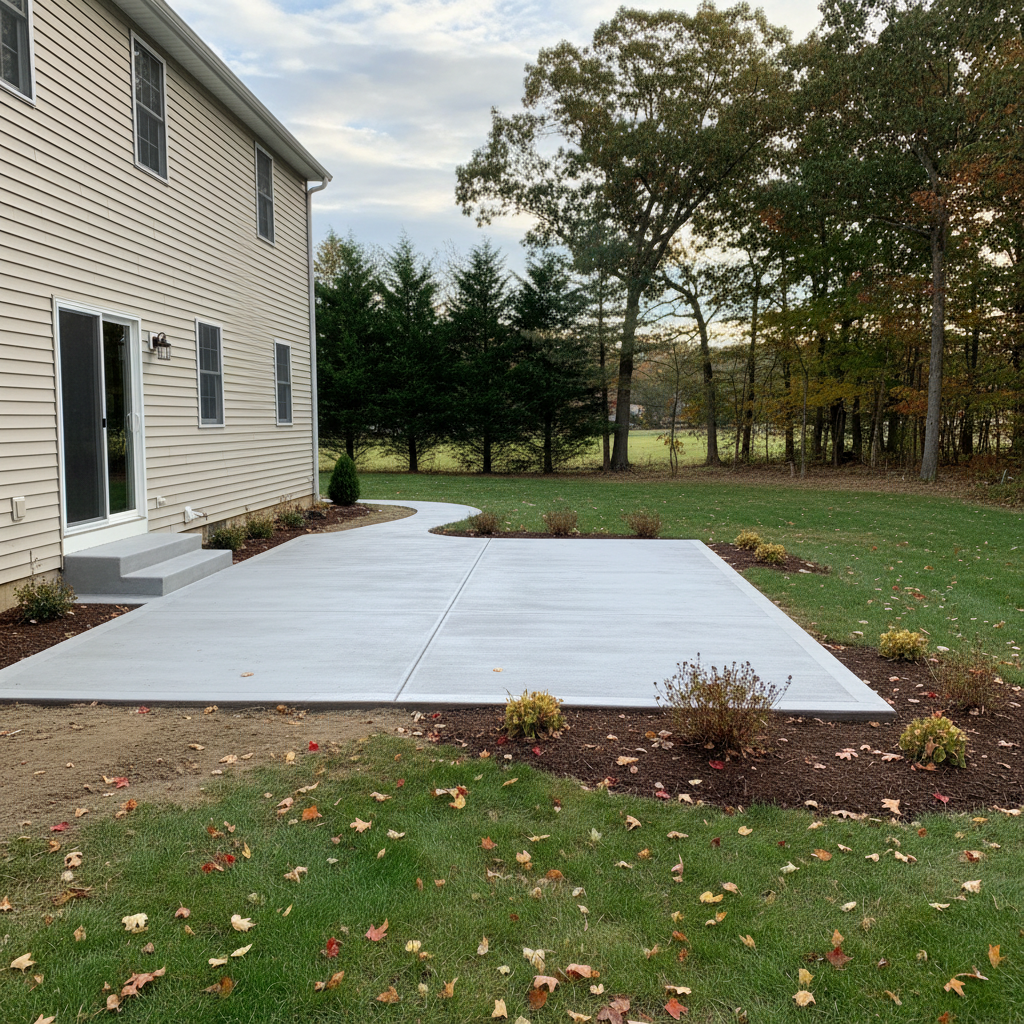
Alright, let's talk concrete here in Toms River. You've got a new patio in mind, or maybe that cracked driveway is finally getting on your nerves. One of the biggest questions I get is, "When's the best time to do this?" And it's a good one, because the weather around here, especially with those ocean breezes and sometimes brutal winters, plays a huge role in how your concrete turns out and how long it lasts.
Timing Your Concrete Project: It's All About the Temperature
You might think concrete can be poured anytime, but that's just not true. For us, the sweet spot for pouring concrete is when temperatures are consistently above freezing, ideally between 50 and 80 degrees Fahrenheit. Why? Concrete needs to cure properly. That's the chemical reaction where it hardens and gains strength. If it's too cold, that reaction slows way down, or even stops. You end up with weak, brittle concrete that's going to crack and spall way faster than it should.
So, what does that mean for you? Spring and fall are usually our prime seasons. Once we get into April and May, the ground has thawed, and we're seeing those consistent daytime highs. The summer months can work too, but we've got to be careful with extreme heat. If it's pushing 90 degrees or more, the water in the mix can evaporate too quickly, leading to shrinkage cracks. We'll use special additives or techniques to slow that down, but it's an extra consideration.
Now, winter? Forget about it for new pours, unless it's an absolute emergency and we're talking about heated enclosures and special mixes, which gets expensive. You just don't want to mess with concrete freezing before it's had a chance to gain strength. It's a recipe for disaster, and honestly, Ocean Concrete Construction won't even schedule new flatwork pours when the mercury is consistently dipping below 40 degrees.
Weather Conditions Beyond Just Temperature
It's not just about the thermometer reading. A few other things we watch out for:
- Rain: A light drizzle during a pour isn't ideal but manageable. A downpour? That's a no-go. Too much water on fresh concrete dilutes the mix, weakens the surface, and can lead to a really ugly finish. We'll always check the forecast and reschedule if heavy rain is expected.
- Wind: Believe it or not, strong winds can be a problem. They can accelerate the evaporation of water from the surface, even on a mild day. This can cause plastic shrinkage cracks before the concrete has even set. We might use windbreaks or apply curing compounds sooner.
- Humidity: High humidity can slow down the drying process, which isn't always bad, but it means we have to adjust our finishing times. Low humidity, combined with wind, can be a real challenge for rapid surface drying.
We're always looking at the whole picture, not just one number. That's why when you call us, we'll talk through the timing and weather expectations.
Protecting Your Concrete Investment Year-Round
Once your new concrete is in, you want it to last. Here's how to protect it, especially with our Toms River climate:
- Curing is Key: For the first week or so after a pour, keep it moist. We'll usually apply a curing compound, but sometimes you might need to lightly mist it with water, especially if it's hot and dry. This helps the concrete reach its full strength.
- Sealing: This is huge. I recommend sealing your concrete within the first year and then every 2-3 years after that. A good quality penetrating sealer will protect against water absorption, de-icing salts, oil stains, and general wear and tear. It's like sunscreen for your concrete.
- De-icing Salts: This is a big one for us here in New Jersey. Avoid using rock salt (sodium chloride) on your concrete, especially in the first year. It's incredibly harsh and can cause spalling and pitting. Use sand for traction, or look for de-icers labeled as concrete-safe, often calcium chloride or magnesium chloride based. Even then, use them sparingly.
- Heavy Loads: Don't park heavy equipment or vehicles on new concrete for at least 28 days. That's when it reaches its full design strength. Even after that, try to avoid concentrating heavy loads in one spot for long periods.
- Clean It Up: Regular cleaning, just with a hose and a stiff brush, can prevent dirt and grime from embedding into the surface. If you get oil or other spills, clean them up quickly before they can penetrate.
Taking a little care goes a long way. You invest in quality concrete work from Ocean Concrete Construction, and with these tips, you'll get years of good use out of your driveway, patio, or walkway. We've seen plenty of concrete around here, from the older homes in the North Dover section to the newer developments, and the ones that last are the ones that were poured right and then looked after.
``` faction: