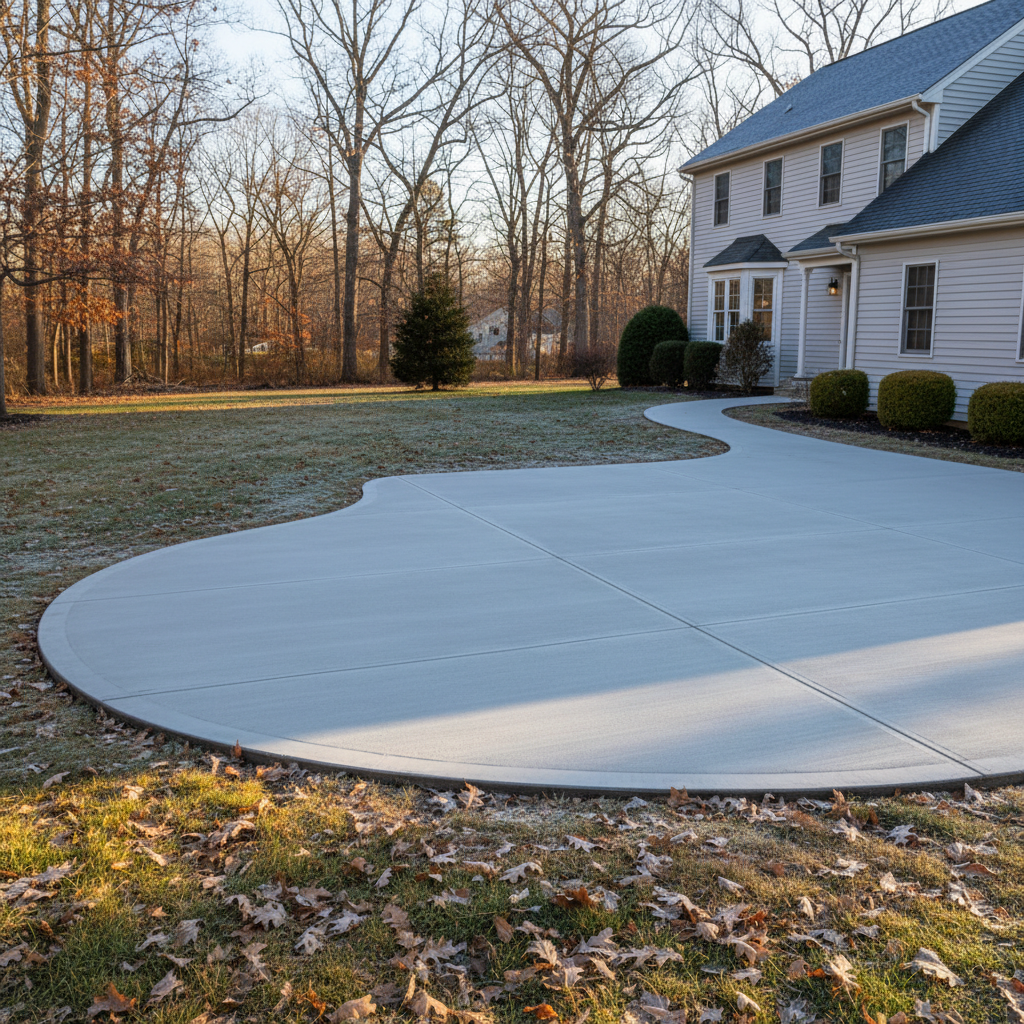
You're looking to get some new concrete flatwork done around your place – maybe a patio, a new driveway, or some fresh walkways. That's a great investment, but here in Toms River, you can't just pick any old day on the calendar and expect the best results. Our local climate, with its salty air and freeze-thaw cycles, means timing is everything for concrete that's going to last.
When's the Best Time for Concrete Work in Toms River?
Honestly, the sweet spot for pouring concrete around here is usually spring and fall. We're talking late April through June, and then again from September through October. Why those windows? It's all about temperature and humidity.
Concrete cures best when the air temperature is consistently between 50 and 80 degrees Fahrenheit. In spring, after the last frost, the ground has warmed up, and you're less likely to deal with sudden cold snaps that can mess with the curing process. In the fall, you still have those mild temperatures, but you're avoiding the intense summer heat that can cause concrete to dry too quickly, leading to cracking.
Summer can be tricky. While we can definitely pour concrete in July and August, we have to be extra careful. The heat can accelerate the drying process, which sounds good, but it can actually weaken the concrete if it dries too fast. We often have to take measures like misting the concrete or using special curing compounds to slow things down. Plus, those pop-up thunderstorms we get around here in the summer? They can wash out a fresh pour in a hurry. It's not impossible, but it adds a layer of complexity.
Winter? Forget about it for most exterior concrete. Freezing temperatures are the enemy of freshly poured concrete. Water in the mix freezes, expands, and totally destroys the strength and integrity before it even has a chance to cure properly. Even if it's a mild winter day, the ground is still cold, and that cold transfers right into your new concrete. We just don't do it unless it's an emergency repair and we can guarantee a heated, enclosed space, which isn't usually the case for driveways or patios.
Weather Conditions That Impact Your Concrete Project
Beyond just the season, the daily weather forecast plays a huge role. Here's what we're always watching:
- Temperature: As I said, 50-80 degrees is ideal. Below 40 degrees, curing slows way down or stops. Above 90 degrees, it dries too fast.
- Rain: A light drizzle isn't the end of the world, but a heavy downpour on fresh concrete is a disaster. It can wash away the cement paste, weaken the surface, and create a rough, uneven finish. We're always checking the radar before we even load up the truck.
- Wind: High winds can dry out the surface of concrete too quickly, even on a mild day. This can lead to what we call 'plastic shrinkage cracks' – little hairline cracks that appear while the concrete is still plastic. We've seen this happen on exposed areas, especially along the bayfront where you get those constant breezes.
- Humidity: Low humidity, especially combined with wind, can also speed up drying and cause issues. High humidity, on the other hand, can slow down curing, which isn't always bad, but it means a longer wait before you can use the surface.
Protecting Your Concrete Investment Year-Round
Once your concrete is poured and cured, your job isn't over. You've made a great investment, and you want it to last. Here's how to protect it:
- Sealing: This is probably the most important thing you can do, especially here in Toms River. A good quality concrete sealer protects against moisture penetration, salt damage (from de-icers and our proximity to the ocean), oil stains, and general wear and tear. I recommend sealing new concrete within the first year and then every 2-3 years after that. It's like sunscreen for your concrete.
- De-icing: Be careful with de-icing salts in the winter. Products containing ammonium nitrates or sulfates can chemically attack concrete. Stick to rock salt (sodium chloride) or, even better, sand for traction. Shovel snow promptly to avoid prolonged moisture exposure and freeze-thaw cycles.
- Cleaning: Keep it clean! Sweep off debris regularly. For tougher stains, a mild detergent and a stiff brush usually do the trick. Avoid harsh chemicals or high-pressure washers that can damage the surface.
- Tree Roots: If you're planting trees near concrete, choose species with non-aggressive root systems. Tree roots are a common culprit for cracked driveways and sidewalks in older neighborhoods, especially in areas like the Silverton section where you have mature trees.
- Heavy Loads: Try not to park excessively heavy vehicles or equipment on your residential driveway regularly. Concrete is strong, but it has its limits.
Look, we've been doing this for a long time at Ocean Concrete Construction. We know the ins and outs of working with concrete in this area. If you're thinking about a project, give us a call. We'll talk through the best timing and what you can expect, so you get a concrete slab that stands the test of time, no matter what Toms River weather throws at it.