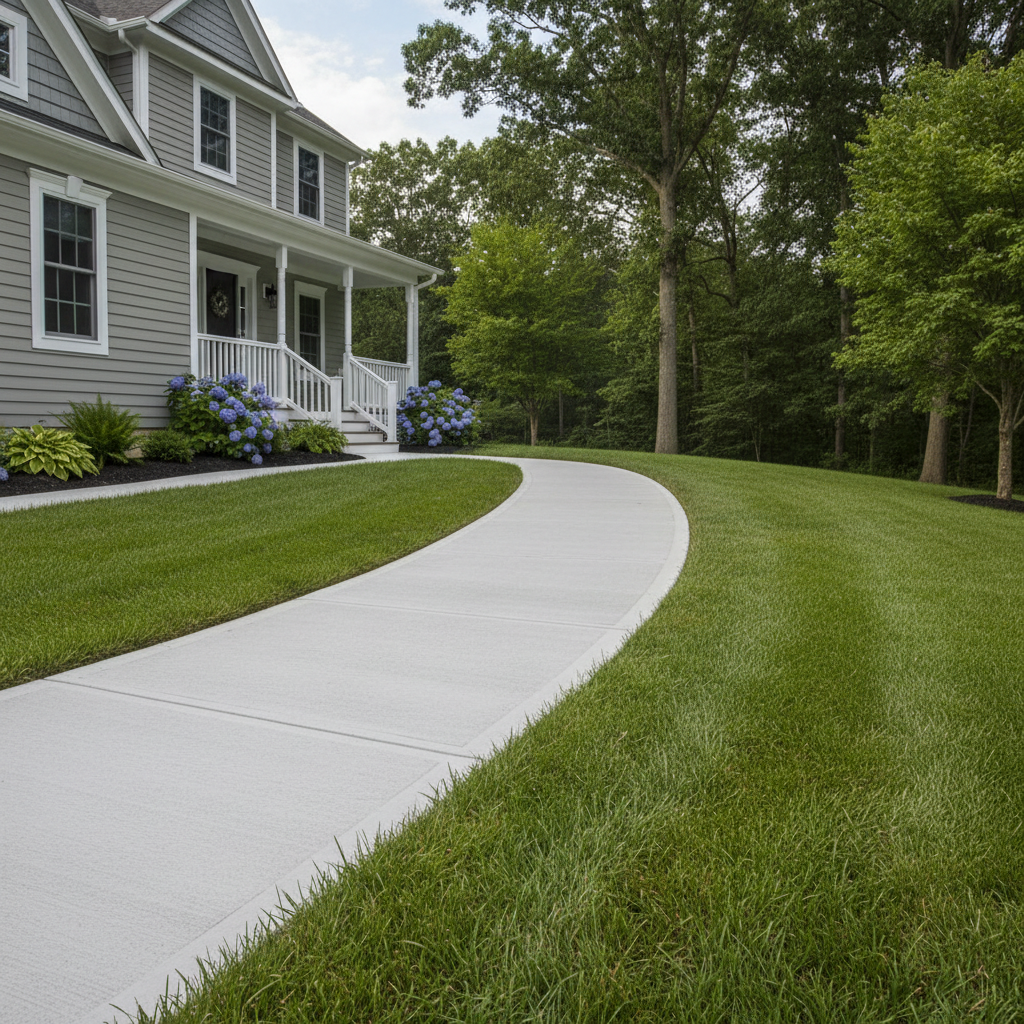
Thinking about putting in a new concrete sidewalk or fixing up an old one? That's a great way to boost your curb appeal and make things safer around your place. But I've seen too many folks in Toms River make some pretty common mistakes that end up costing them more time, money, and frustration than they ever expected. Let's talk about what to watch out for so you don't end up regretting your decision.
Not Getting Specific About the Scope
One of the biggest issues I run into is when homeowners aren't clear about what they actually want. They'll say, "I need a new sidewalk," and that's it. But is it just a straight path from the driveway to the front door? Does it need to tie into an existing patio? Are we talking about a simple broom finish, or do you want something decorative like stamped concrete? How wide do you need it? These details matter a lot for pricing and for the final look.
If you don't spell out exactly what you're looking for, you're leaving a lot open to interpretation. And believe me, contractors interpret things differently. Get out there, measure it, sketch it out, and think about the exact path and features you want. The more specific you are upfront, the less chance there is for misunderstandings down the road. It also helps you compare bids accurately.
Ignoring the Importance of Proper Sub-base Prep
You know, down here in Toms River, especially closer to the bay, we've got a lot of sandy soil. That's great for drainage in some ways, but it also means you can't just pour concrete directly onto it and expect it to last. A solid concrete sidewalk is only as good as what's underneath it.
I've seen plenty of sidewalks crack and heave prematurely because the contractor skipped or skimped on the sub-base. You need a properly compacted, stable base, usually made of gravel or crushed stone, under that concrete. This provides drainage, prevents settling, and gives your slab the support it needs to handle foot traffic and the freeze-thaw cycles we get here in New Jersey. If a contractor isn't talking about proper excavation and base preparation, that's a huge red flag. Don't let them cut corners here; it's the foundation of your foundation.
Hiring Based Solely on the Lowest Bid
Look, I get it. Everyone wants to save a buck. But when it comes to concrete work, going with the cheapest guy often means you're going to pay for it twice. The lowest bid usually means corners are being cut somewhere. Maybe they're using cheaper materials, not doing proper prep, or they're not insured. You don't want to find out your contractor isn't insured when one of their guys gets hurt on your property, or when the sidewalk cracks six months later and they're nowhere to be found.
Always get at least three bids. Compare them not just on price, but on what they include. Ask about their experience, check references, and make sure they're licensed and insured. A reputable company like Ocean Concrete Construction might not always be the absolute cheapest, but we stand by our work because we do it right the first time. You're investing in your home; treat it like an investment.
Not Understanding the Curing Process
Once the concrete is poured, the job isn't over. The curing process is critical for the strength and durability of your sidewalk. Concrete doesn't just dry; it cures through a chemical reaction that needs moisture. If it dries out too quickly, you'll end up with a weaker slab that's more prone to cracking.
Good contractors will talk to you about curing. They might use curing compounds, keep it wet, or cover it with plastic. And they'll tell you how long to stay off it. Don't let the kids ride bikes on it the next day! Give it the time it needs to reach its full strength. Usually, you're looking at 3-7 days for light foot traffic, and a lot longer before it reaches its full design strength.
Forgetting About Permits and HOA Rules
This is one people often overlook. Depending on the size and location of your new sidewalk, you might need a permit from Toms River Township. If you're replacing a public sidewalk, that's almost certainly the case. And if you live in one of the many planned communities or HOAs around here, like some of the developments off Hooper Ave, you've probably got specific rules about materials, setbacks, and even colors. Don't start digging until you've checked these things out. Getting caught without a permit or violating HOA rules can lead to fines, delays, and even having to tear out your new work.
Doing your homework upfront, asking the right questions, and not rushing into things will save you a lot of grief. A new concrete sidewalk should be a positive addition to your home, not a source of stress.