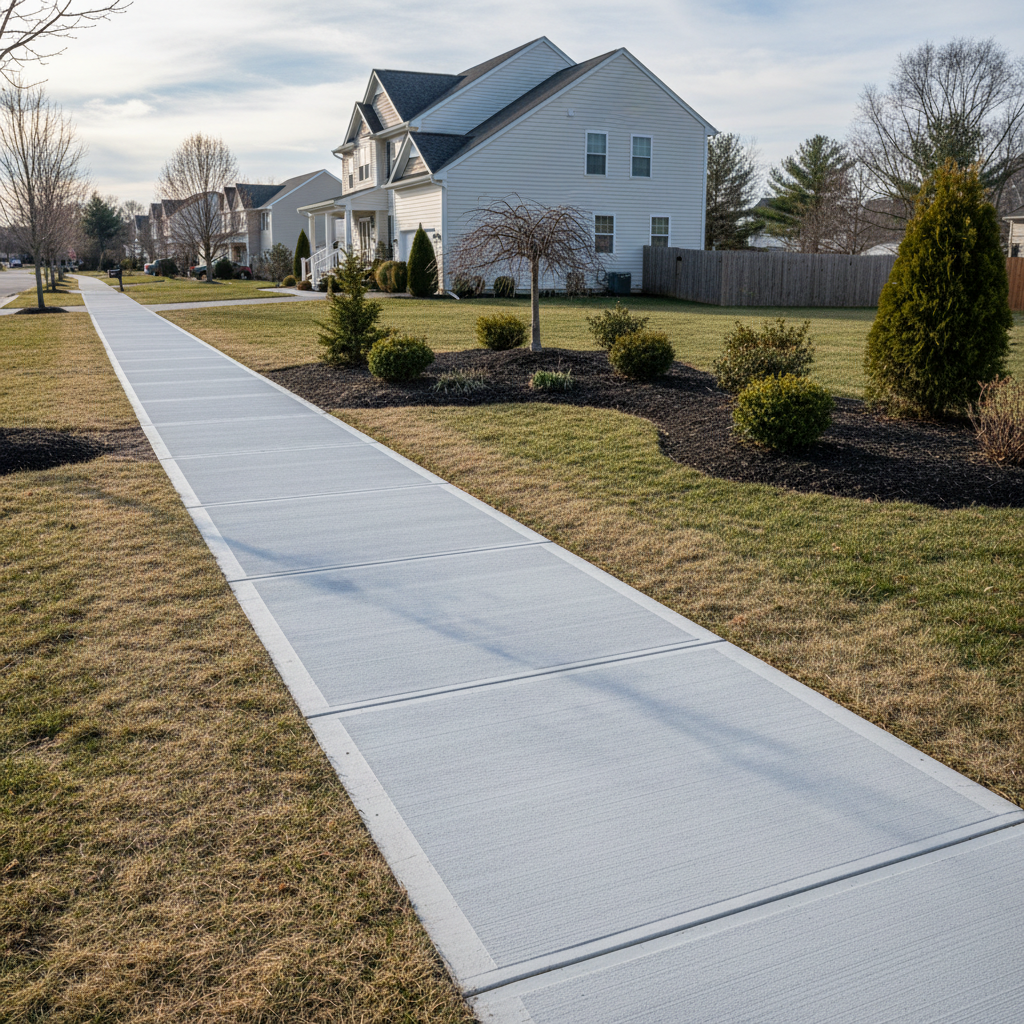
Alright, let's talk concrete sidewalks. I've been doing this a long time here in Toms River, and I've seen just about everything. When folks decide it's time for a new walk, or to fix up an old one, there are a few common mistakes that pop up again and again. These aren't always obvious, but they can cost you big time down the road. So, let's get into what you really need to watch out for.
Skimping on the Prep Work
This is probably the biggest one. Everyone wants a nice, smooth sidewalk, right? But what's underneath that concrete is just as important, maybe even more so. I've seen homeowners, or even some less reputable contractors, try to cut corners on the sub-base. They'll just pour right over existing dirt, or maybe throw down a thin layer of whatever's cheap.
Here's the deal: our soil around here, especially in some of the older sections of town closer to the bay, can be pretty sandy and sometimes has a high water table. If you don't properly compact and grade that sub-base, and make sure you've got good drainage, that concrete's going to crack. It's not a matter of if, but when. Water gets under there, freezes, expands, and lifts the slab. Or the ground settles unevenly, and boom, you've got a trip hazard. A good contractor, like us at Ocean Concrete Construction, will spend the time to get that base right. It's non-negotiable.
Ignoring Proper Drainage and Slope
Another big one. You'd think it's common sense, but I've seen plenty of sidewalks that are either completely flat or, even worse, slope towards the house. What happens then? Every time it rains, or when the snow melts, that water just sits there or runs right into your foundation. That's a recipe for all sorts of problems, from slippery surfaces to water damage in your basement or crawl space.
A concrete sidewalk needs a slight, consistent slope away from any structures. We're talking about a quarter-inch per foot, minimum. It's enough to shed water without being noticeable when you walk on it. Don't let anyone tell you it's not important. If the water doesn't have somewhere to go, it's going to cause trouble.
Choosing the Wrong Concrete Mix
Not all concrete is created equal, and this is where some homeowners get tripped up. They might just ask for